Madtsoia is an extinct genus of prehistoric snakes. Scientists find the genus Madtsoia especially fascinating for its unique evolutionary history.
Quick Madtsoia Facts
- Lived from the Late Cretaceous Period through the Pleistocene Period, the prehistoric snake genus called Madtsoia spanned millions of years.
- Lived in Africa, South America, Europe and Madagascar; the presence of Madtsoia fossils across continents highlights its wide ancient distribution.
- Was 3 times longer than a horse, showing that Madtsoia could reach impressive lengths.
- Weighed as much as 2 car tires; in fact, estimates for the weight of Madtsoia vary depending on the specimen discovered.
- Was a Carnivore, with the Madtsoia genus hunting other animals for sustenance.
About Madtsoia
Madtsoia is an extinct snake which lived from approximately 90 million years ago to 2 million years ago. This ranges from the Late Cretaceous Period through the Pleistocene Period. It was first discovered during the 1930s in Argentina. It was named by George Gaylord Simpson in 1933. This established Madtsoia as the type genus for some ancient snakes.
One of the most important facts about Madtsoia is that it is more important as a representative of a genus than it is as a specific species. What I mean by that it is the representative snake of all of the snake ancestors of today. These are the madtsoiidae. These animals were widely distributed all across the planet for over 88 million years ago. However, it is currently unclear how these prehistoric snakes were related to the snakes of today. The genus called Madtsoia sheds light on the evolutionary lineage.
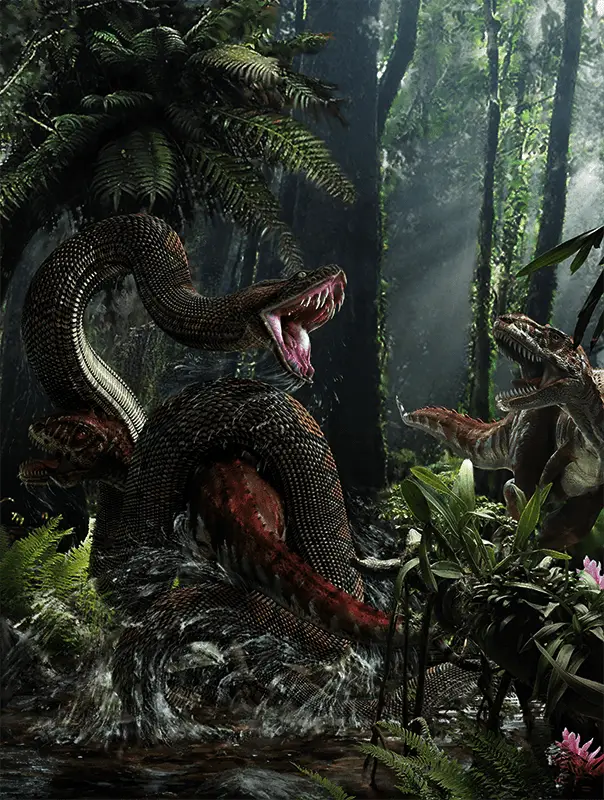
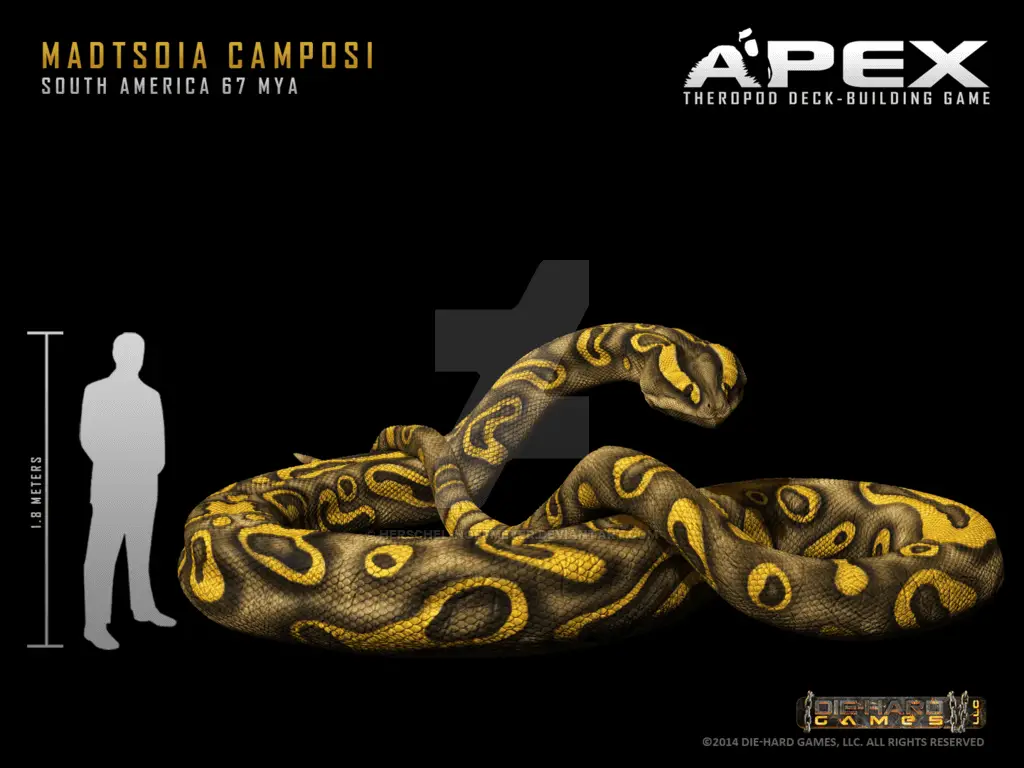
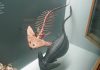
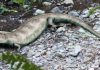
If you take a look at Madtsoia pictures, then you’ll notice this snake was approximately 30 feet long and weighed around 50 pounds. However, there have been specimens found that were only 10 feet long and weighed approximately 5 pounds. With current evidence, it is unclear just how big these snakes grew. Madtsoia, as a genus, includes a range of sizes among its fossils.
What is known about this snake, however, is that it probably hunted and killed its prey much like a modern boa. It would wrap itself around its prey and then constrict it to death. This resulted in the animal not being able to breathe, and thereby asphyxiating, or damage being done to the animal’s heart. This would have led to cardiac arrest. Either way, this snake then would’ve been able to swallow its prey whole. It could then digest it at its leisure. This hunting technique is characteristic of the prehistoric genus Madtsoia.
While paleontologists don’t exactly know why these snakes were able to survive the K/T Extinction Event, there are a few theories. One of these theories is that this reptile’s cold-blooded nature and slower metabolism saved it. It is believed that dinosaurs may have been warm-blooded. However, even if they weren’t, they most likely had metabolisms which were faster and required constant fuel from food. When the extinction level event happened, there just wasn’t enough food to support these dinosaurs and they died. Madtsoia was cold-blooded and had a slower metabolism. Therefore, it could handle the scarcity in food and essentially wait for the planet to rebound. Thus, Madtsoia as a genus demonstrates remarkable adaptability among prehistoric snakes.
Madtsoia Pictures